Few things are as rattling as the thought of your home sale falling through at the last minute, right before closing. All that waiting, all that progress, out the window.
But if you’re getting ready to sell, here’s what you should know. Even in today’s market, it rarely comes to that. Buyers who are moving at today’s rates and prices are generally moving because of some big life change. That means they’re motivated, and eager to get all the way to the closing table.
According to the latest data from Redfin, only about 1 in 7 pending sales are falling through. Meaning the vast majority make it all the way to closing.
And the single biggest thing that puts a deal at risk is the one you have the most power to prevent. It just takes a little smart planning before your house hits the market.
Why Some Deals Fall Apart Before Closing
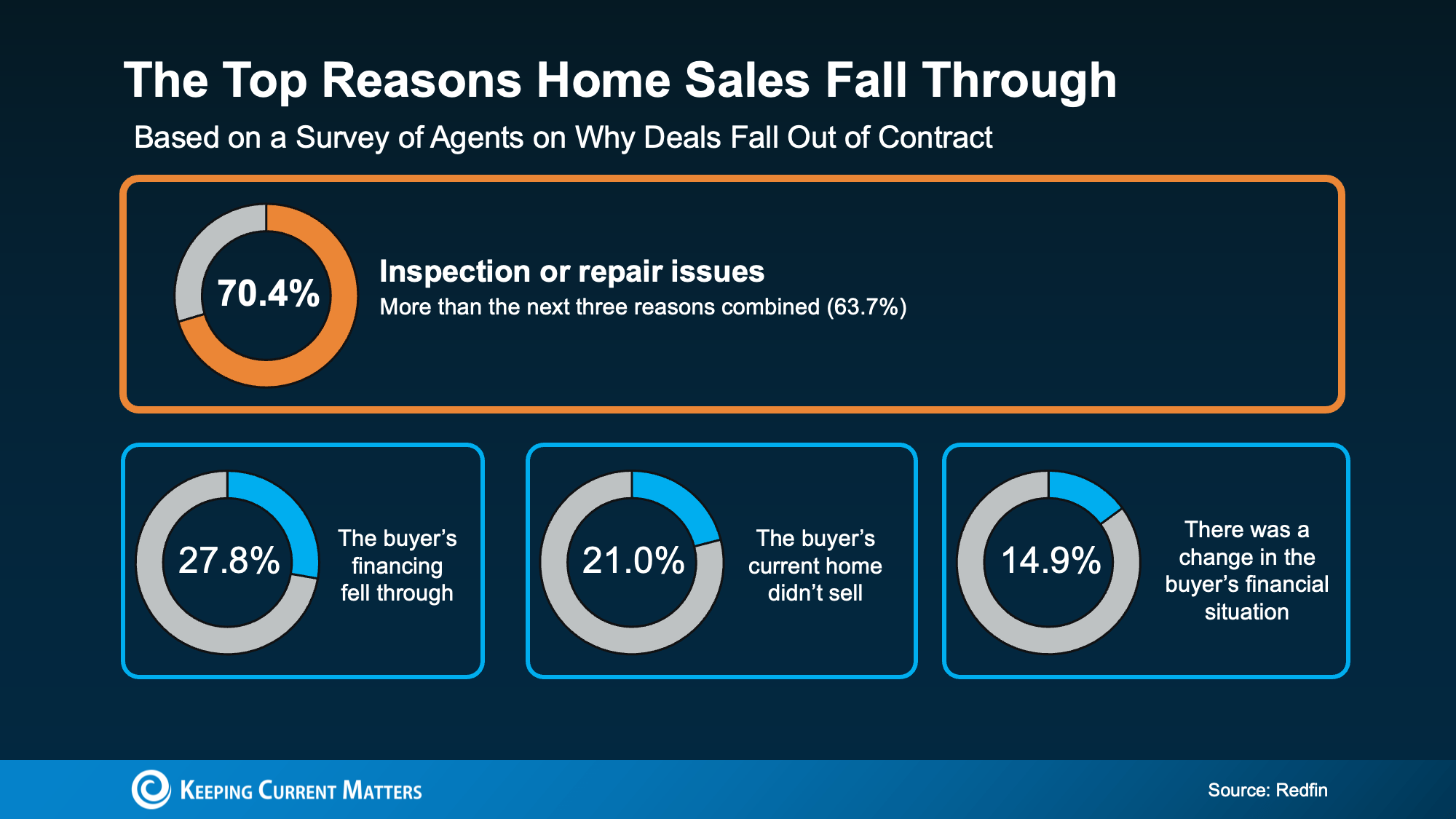
A Redfin survey sheds light on the most common things that trip up a sale (see visual below):
Here’s a bit more information on each one.
Inspection or repair issues. This is the big one. When a buyer’s inspector finds a problem, whether with the roof, the plumbing, the foundation, or elsewhere, the buyer can push back, ask you to make repairs, request a credit so they can do it themselves, or see if you’ll lower your price. If they don’t get what they want, they may walk away from the deal altogether.
The buyer’s financing fell through. Their mortgage loan has to be fully approved in time for closing day. If the loan doesn’t come together, the sale can’t move forward.
The buyer’s current house didn’t sell. Some buyers need to sell their own home before they can close on yours. If that takes longer than expected, you may run into some issues with your timeline or even see them give up on their move.
There was a change in buyer’s financial situation. A new job, a big purchase, or new debt can change what a buyer qualifies for on their mortgage loan, even after they were pre-approved.
Where Your Agent Makes the Difference
Some of those reasons are outside your control, like whether a buyer’s loan clears or whether they sell their own home in time. But according to Zillow, there are a few proactive things you can do to help make sure your sale goes as smoothly as possible:
Save yourself the headache and get a pre-listing inspection. That’s when you get your own inspection before a buyer gets theirs. It lets you find the big issues before a buyer’s inspector does, so you can fix them or disclose them on your terms, instead of scrambling once you’re under contract. In this situation, your agent will help you decide what’s worth addressing and what to just disclose. Handle it now, and the biggest risk to your sale is behind you before a buyer ever brings it up.
Look at more than just the offer price. Your agent will help you weigh the whole offer, including the buyer’s timeline and any contingencies attached. When a buyer’s offer depends on selling their own home first, the success of your sale rides on a second deal you can’t see. Sometimes, a slightly lower offer with fewer strings is the safer one. Your agent will help you weigh your options and make a plan that works well for you.
One of those is something you can’t do until you have offers in hand, but the other is something you can get ahead of right now. The pre-listing inspection.
That relatively small cost upfront can save you the much bigger hassle of a deal falling apart later. And while getting your own inspection before listing may not make sense in every market, your agent can tell you whether it’s worth it based on your market, your house, and what buyers are prioritizing in your area.
Sometimes the smartest move is staying one step ahead.
Frequently Asked Questions
Q: What is a pre-listing inspection, and why should a seller get one?
A: A pre-listing inspection is a home inspection hired by the seller before putting the home on the market. It allows you to identify hidden structural, mechanical, or safety issues early so you can fix them, price the home accurately, or disclose them upfront, preventing major surprises during contract negotiations.
Q: Do I have to fix every issue found during a pre-listing inspection?
A: No. You are not required to repair every item discovered. With the guidance of your real estate agent, you can decide which critical issues (like roof leaks or electrical problems) are worth fixing to protect your home's value, and which minor issues can simply be disclosed to prospective buyers as-is.
Q: What happens if a buyer's financing falls through right before closing?
A: If a buyer's mortgage loan fails to clear underwriting, the transaction cannot proceed. In most cases where a financing contingency is present, the contract is terminated, the buyer's earnest money deposit is returned according to contract terms, and the home is put back on the active market.
Q: Why might a lower offer sometimes be safer than a higher offer?
A: A higher offer often comes with complex contingencies, such as the buyer needing to sell their current home first or asking for extensive repair credits. A slightly lower offer with standard financing, fewer contingencies, or a larger down payment represents significantly less risk of falling through before closing.
Bottom Line
Most home sales still close, and the biggest thing that could get in the way of yours is the one thing you can actually do something about.
With the right prep, your sale has every reason to make it to the finish, and a good local agent can help you get there.