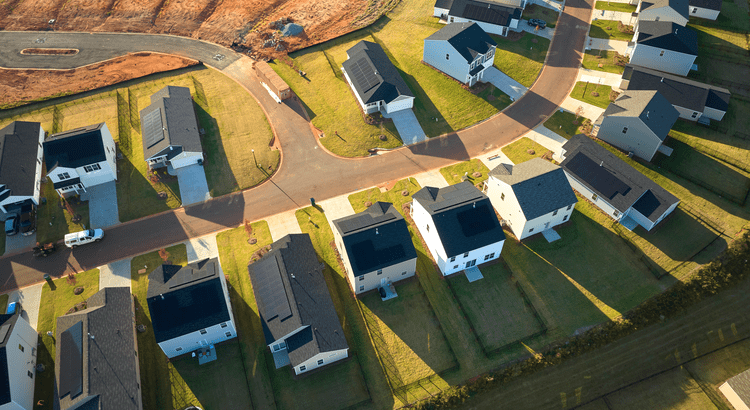
House hacking in Menlo Park sounds great on paper. Live in one unit, rent the other, and let the property help cover your payment. But in 94025, the numbers and zoning rules make this strategy very different from what you might see in lower-cost markets. If you are exploring ADUs, duplexes, or small multifamily properties here, you need a plan grounded in local facts, not generic advice. This guide will walk you through where house hacking can work in Menlo Park, what the city allows, and how to think about the numbers before you buy. Let’s dive in.
Why Menlo Park house hacking is different
Menlo Park is a high-cost market, and that changes the math right away. Zillow’s home value index puts the average home value at $2,865,159 as of March 31, 2026, while February 2026 median sale price data shows $2,560,000. Redfin’s March 2026 market data shows a $3.0 million median sale price, with homes selling in about 11 days.
That means house hacking here is usually not about creating strong monthly cash flow from day one. In most cases, it is better viewed as an affordability-offset strategy. Rental income may reduce your monthly carrying cost, but it often will not eliminate it.
Inventory also stays tight, especially for true multifamily options. Redfin shows just 3 multifamily homes for sale in Menlo Park, with a median listing price of $2.55 million. Zillow’s 94025 duplex and triplex results also showed only 3 active listings, roughly ranging from $3.3 million to $4.79 million.
Best Menlo Park house hack options
Single-family with an ADU
For many buyers, the most practical path is buying a single-family home with room for an accessory dwelling unit. Menlo Park’s public guidance says a single-family parcel may build up to two ADUs, specifically one detached and one attached, interior, or junior ADU. The city also says there is no minimum lot size, and the minimum ADU size is 150 square feet.
An ADU must have separate exterior access and independent kitchen and bathroom facilities. Menlo Park also states that ADUs generally cannot be sold or subdivided separately from the primary residence. So if you are evaluating long-term value, think of the ADU as part of one property strategy, not as a separate resale unit.
In practice, the easiest opportunities are often already built into the property. Garage conversions, basement conversions, and underused attached space can be the lowest-friction options because Menlo Park allows interior ADUs and allows conversions of existing accessory space to retain existing setbacks. That can make older homes with flexible layouts especially interesting for owner-occupants.
Existing duplexes and small multifamily
If your goal is stronger rental offset, an existing legal duplex or triplex may be the cleaner setup. Menlo Park allows up to two detached ADUs on qualifying multifamily parcels and allows interior ADU conversions up to 25% of the existing unit count in multifamily buildings. Junior ADUs are not allowed on multifamily lots.
That matters because legal duplexes and small apartment properties can offer more built-in rental income from the start. If the property also has convertible interior space, you may have additional value-add potential beyond the existing units. For buyers who want a more investment-focused approach, this is often the most efficient house hacking format in Menlo Park.
Where zoning supports the strategy
Single-family parcels
On single-family lots, ADUs are the main path. Trying to create a more intensive multifamily setup from scratch on a standard single-family parcel is usually much harder than working within the city’s ADU framework. That is why many owner-occupants focus on homes with an existing garage, basement, or attached area that could fit an ADU plan.
Parking can become the deciding factor. Menlo Park says one off-street parking space is usually required for attached or detached ADUs, but no parking is required for interior ADUs and several other cases, including ADUs located within one-half mile walking distance of public transit. That single detail can materially affect whether a property is practical for your plan.
R-2 and R-3 areas
Menlo Park’s R-2 district explicitly allows duplexes and projects with three or more dwelling units. The R-3 apartment district also allows duplexes, and permits three or more units in the El Camino Real and Downtown Specific Plan area, while three or more units elsewhere in R-3 are treated as conditional uses.
For buyers, the takeaway is simple. The cleanest duplex and triplex opportunities are usually existing legal multifamily properties or parcels already in multifamily zones. Trying to force a triplex concept onto a property that was not set up for it is usually not the easiest route.
What rents can realistically offset
Current Menlo Park rents are meaningful, but they need to be viewed against a very high acquisition cost. Zillow lists average rents at about $2,900 for a one-bedroom, $4,695 for a two-bedroom, and $6,250 for a three-bedroom. Trulia’s May 2026 figures are similar at $3,100, $4,687, and $6,500.
For underwriting, the range matters more than any single number. Smaller ADUs and junior ADUs usually fit closer to the one-bedroom band. Larger detached ADUs and full duplex units often align more closely with the two-bedroom range, depending on layout and finish level.
This is why design and unit type matter so much in Menlo Park. A compact conversion may still help, but a larger, well-planned unit can move the income needle more meaningfully. The difference between one-bedroom and two-bedroom rent levels is large enough to affect your purchase decision.
Sample house hacking math in Menlo Park
Using the research assumptions of 20% down, a 30-year fixed loan at 7.0%, 1.2% effective property tax, $300 per month for insurance, and a 0.5% annual maintenance reserve, a $2,865,159 Menlo Park home produces about $19,600 per month in all-in carrying cost before tax benefits.
At that basis, a one-bedroom ADU rented around $3,100 per month covers only about 16% of the monthly carrying cost. A two-bedroom ADU at roughly $4,700 per month covers about 24%. That still leaves the owner making a substantial monthly payment from their own income.
Now look at a duplex or triplex acquisition around $2.55 million using the same assumptions. The modeled all-in carrying cost comes to about $17,500 per month. If you rent two units at current average two-bedroom and three-bedroom rents, about $4,695 plus $6,250, your gross rent totals roughly $10,945 per month, leaving about a $6,500 monthly shortfall before tax benefits.
Even at 30% down, the modeled shortfall is still about $4,800 per month. If the property is priced closer to the top of the current 94025 duplex and triplex listing range, the economics become even more challenging. That is why the strongest Menlo Park house hacks are usually about reducing your housing cost while building long-term equity, not generating immediate positive cash flow.
How to spot a workable property
A good Menlo Park house hacking opportunity usually checks several boxes at once. The property type matters, but so do layout, zoning, parking, and conversion complexity.
Here is what to look for:
- Existing legal multifamily status if you want immediate rental income from more than one unit
- Garage, basement, or attached bonus space that may support a lower-friction ADU conversion
- Transit proximity if parking relief could improve ADU feasibility
- R-2 or R-3 zoning context for duplex or small multifamily strategies
- A purchase basis that still works with a monthly owner contribution
- A layout that supports separate exterior access for an ADU
The best deals are often not the ones with the flashiest marketing. In Menlo Park, a slightly dated property with legal flexibility can be more valuable than a fully polished home with no realistic path to added income.
Why permit timing matters
Menlo Park is actively revising its ADU ordinance in 2026 to align with state law and local objective standards. The city’s permit process page says new ADU applications now use a two-step ministerial review with 15 business days for completeness review and 60 calendar days after completeness for approval or denial.
That is useful for planning, especially if you are buying with the intent to add an ADU soon after closing. Still, timing only helps if the property is truly a fit from the start. A fast review process does not fix a weak floor plan, parking conflict, or unrealistic budget.
The lease rules also matter. Menlo Park says ADUs rented after January 1, 2020 require a minimum 30-day lease term. So if your plan depends on short-term rental income, that underwriting approach does not match current local rules.
A smart way to approach house hacking here
In Menlo Park, the most successful buyers usually start with the property, not the idea. They ask whether the lot, zoning, layout, and parking support the strategy cleanly. Then they model the likely rent offset against the real monthly cost of ownership.
That disciplined approach matters in a market where buying mistakes are expensive. If you are considering a single-family home with ADU potential, or an existing duplex or triplex in 94025, the right analysis can quickly separate a workable opportunity from an attractive but flawed one.
If you want a data-backed read on a specific property, zoning setup, or rental-offset scenario in Menlo Park, NOOPUR GUPTA can help you evaluate the trade-offs and identify opportunities that fit your goals.
FAQs
What does house hacking in Menlo Park usually mean?
- In Menlo Park, house hacking usually means living in one part of the property while renting out an ADU or one or more units in a legal duplex or triplex to offset your monthly housing cost.
Are ADUs allowed on single-family lots in Menlo Park?
- Yes. Menlo Park says single-family parcels may build up to two ADUs, specifically one detached and one attached, interior, or junior ADU, subject to the city’s rules.
Can you do short-term rentals with an ADU in Menlo Park?
- No, not as a standard house hacking strategy. Menlo Park says ADUs rented after January 1, 2020 must have a minimum lease term of 30 days.
Are duplexes allowed in Menlo Park zoning districts?
- Yes. Menlo Park’s R-2 district explicitly allows duplexes, and the R-3 district also allows duplexes.
Is house hacking in Menlo Park a cash-flow strategy?
- Usually no. Based on current home prices, listing ranges, and rent benchmarks, house hacking in Menlo Park is more often an affordability-offset strategy than a true monthly cash-flow play.
What type of Menlo Park property is best for house hacking?
- The cleanest options are often existing legal duplexes or triplexes, or single-family homes with garage, basement, or attached space that may support a lower-friction ADU conversion.