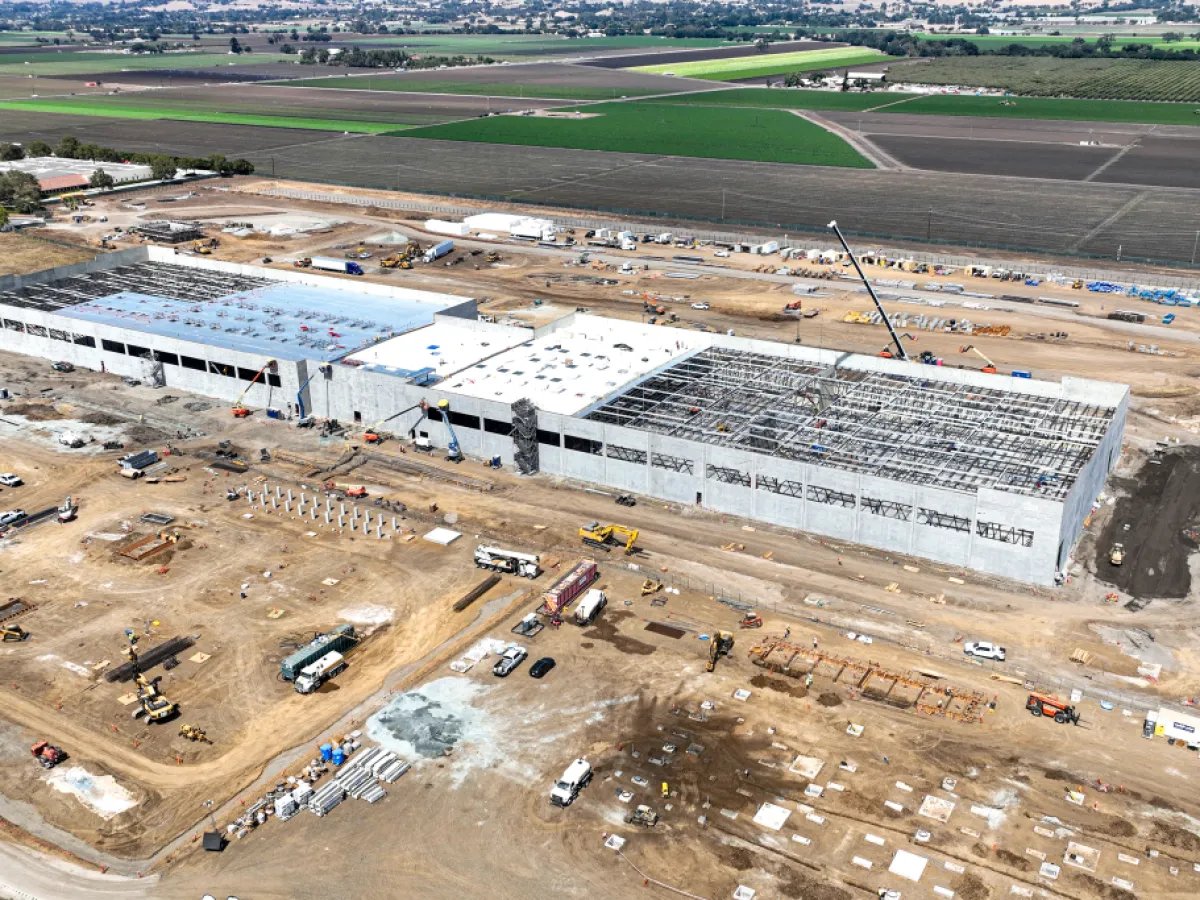
On August 24, 2026, Cupertino's planning department signed off on another modification to The Rise at Vallco, the sprawling mixed-use redevelopment rising on the old Vallco Mall site at Interstate 280 and Wolfe Road. If you've been watching Cupertino from the outside and hoping the city's most-talked-about housing project would finally loosen a brutally tight market, this looked like the headline you'd been waiting for. It isn't.
The modification approved that week touched only Blocks 1 and 2 of the project, refining parking layouts and loading access rather than adding a single new home to the plan. Block 1 stays at 235 residences, Block 2 at 258, a combined 493 units unchanged from what was already on the books. That's the kind of detail that matters if you're deciding whether to buy in Cupertino this fall or wait for relief that a 50-acre construction site is supposedly bringing. The relief, on the numbers, is much smaller and much further away than the project's total size suggests.
What the City Actually Signed Off On
The Rise has been Cupertino's longest-running development fight, working through litigation, ballot measures, and years of council debate since its original approval under state housing law in 2018. What's approved today is an implementation-stage refinement, the kind of filing that adjusts how buildings within an already-entitled project get built, not whether they get built at all. City records show the project moving from parcel maps and infrastructure approvals in July 2026 to building-level details in August, a sign the paperwork is advancing even if ground has yet to visibly rise.
That advancement followed a rockier turn the previous fall. In late November 2025, the developer, Sand Hill Property Company, submitted a revised plan to Cupertino's city manager that cut the project's affordable housing component by 60 percent and its office space by 25 percent, citing the need to keep the project financially feasible. Cupertino's mayor, Liang Chao, publicly noted that the timing of that submission, the day before Thanksgiving, appeared designed to move through the city's 60-day review window with less scrutiny than a normal filing season would allow. The company's response framed the timing as a courtesy to the city's holiday workload rather than a strategy to limit attention. Either way, the revision stuck. It's the version of The Rise still moving through approvals today.
The Math Behind "2,669 New Homes"
The full build-out of The Rise still calls for 2,669 residential units across the site, a number that gets repeated often enough that it's easy to mistake for imminent relief. The first phase to reach construction, known as Town Square West, breaks that promise down into something much more specific.
| Component |
Units |
| Total project (full build-out) |
2,669 |
| Town Square West (Phase 1) |
1,369 |
| — Affordable rentals |
232 |
| — Market-rate rentals |
744 |
| — For-sale homes |
393 |
Of the 1,369 homes in that first phase, only 393 are for-sale product, the kind a buyer could actually purchase rather than rent. The rest are rental units, affordable and market-rate alike, which don't compete with the for-sale single-family and condo market that sets the price a Cupertino buyer pays today. A construction permit application has been submitted so far for one building: the 232-unit affordable apartment community. The developer's own project messaging points to construction starting before the end of 2026, with first homes and amenities arriving by 2028. Nothing has been announced yet on pricing, floor plans, HOA dues, or a sales release date for those 393 for-sale homes. As of this writing, there is nothing to reserve, nothing to price against, and nothing that changes the competitive math for a buyer writing an offer this quarter.
That's the gap between the number people repeat and the number that matters. A buyer weighing whether to wait for The Rise to cool the market is weighing a 2028 delivery date, in an unannounced price range, against a shortage that exists in Cupertino right now.
Why the Existing Shortage Won't Wait for 2028
That shortage is not a talking point. According to MLSListings, the regional multiple listing service used by nearly all Bay Area agents, Cupertino's single-family market carried just 33 active listings as of June 2026, against a median sale price of $3,350,000 and a median 14 days on market. Months of inventory sat at 1.7, well under the four-to-six-month range most agents consider a balanced market between buyers and sellers. At that pace, the entire current supply of single-family homes for sale in Cupertino would sell out in under two months if no new listings appeared at all.
Separate snapshots taken at other points in 2026 have put active single-family listings anywhere from the mid-20s to the mid-40s, a range that moves with the season but never approaches anything close to genuine surplus. Cupertino is a city of roughly 58,800 residents packed into about 6 square miles, and the physical footprint of the city simply doesn't produce many new single-family lots in a given month, redevelopment project or not.
Town Square West's 393 for-sale homes, whenever they arrive, will be a mix of for-sale product inside a dense, mixed-use district, not additional single-family inventory in Cupertino's existing residential neighborhoods. They may ease pressure on the for-sale condo and townhome segment specifically, once they're built. They won't touch the single-family scarcity that's setting today's price, because that scarcity is structural. It's a function of how much of Cupertino is already built out, not how many units are entitled two miles away at Wolfe Road.
What Your Money Actually Buys Inside Six Square Miles
If waiting for city-wide supply isn't the lever a Cupertino buyer controls, location inside the city is. Cupertino sits at the junction of Interstate 280 and Highway 85, putting Apple Park within about five minutes of much of the city, Google's Mountain View campus around 15 minutes away, and NVIDIA's Santa Clara headquarters about 20 minutes out. That geography plays out differently street by street.
Homes in Monta Vista, Garden Gate, and Rancho Rinconada, all within easy biking or walking distance of Apple Park, consistently carry a visible premium over comparable homes elsewhere in the city, a pattern that's held since Apple's second campus opened. Monta Vista in particular pairs that proximity with attendance at Monta Vista High School, a perennial top-ranked campus in Fremont Union High School District, and with access to Blackberry Farm and the McClellan Ranch Preserve, an 18-acre former horse ranch that now functions as a nature center. West of Bubb Road, the housing stock skews newer and larger, with more custom-built and extensively remodeled two-story homes than in Cupertino's older eastern tracts. The flatland neighborhoods closer to Stevens Creek Boulevard and De Anza Boulevard offer a different trade: older ranch-style homes, more typical Silicon Valley suburban density, and a comparatively lower entry point for buyers who don't need to be within biking distance of any single employer.
None of these are better or worse choices in any absolute sense. They're different bets on what proximity is worth to a specific household, and they're the only variable a Cupertino buyer actually controls while a 50-acre construction project two years from its first closing works its way through permits.
Two Questions Worth Answering Directly
Will homes at The Rise be more affordable than resale homes in Cupertino today? Nothing has been priced yet. The for-sale component is 393 units inside a dense mixed-use district, not detached single-family homes, so the comparison to Cupertino's existing single-family stock isn't apples to apples even once pricing is announced.
Should I wait until 2028 to buy in Cupertino? Based on what's actually approved and permitted as of September 2026, waiting means sitting out two more years of a market running at under two months of single-family supply, for a product type, phase timing, and price point that haven't been confirmed. The math favors deciding on today's inventory, not a future delivery date that keeps moving.
The Rise is a real project, and it will eventually change what Wolfe Road looks like. It isn't the reason to delay a decision in a market where the actual constraint, buildable single-family land inside six square miles, isn't something any development can solve. If you're weighing Cupertino against another Peninsula city, or trying to figure out which few blocks inside Cupertino match what you actually need, Gupta Heights can walk through the current inventory and the trade-offs by neighborhood. Schedule a consultation to talk through the numbers before your next offer.