Financial and real estate data highlight that while median 401(k) balances for middle-aged Americans reach six figures, tapping retirement accounts for a home down payment carries financial risks, including early withdrawal penalties and lost compound growth. Before pulling from a 401(k), buyers should evaluate alternatives such as low-down-payment mortgages (FHA 3.5% down, VA/USDA 0% down) and state or local down payment assistance (DPA) programs under the guidance of a qualified financial advisor.
Here’s what you need to remember. Pulling from your retirement savings is a big decision, so take time to weigh all your options first and be sure to talk with a financial expert before you do anything.
Why Dipping into a 401(k) Can Be Tempting
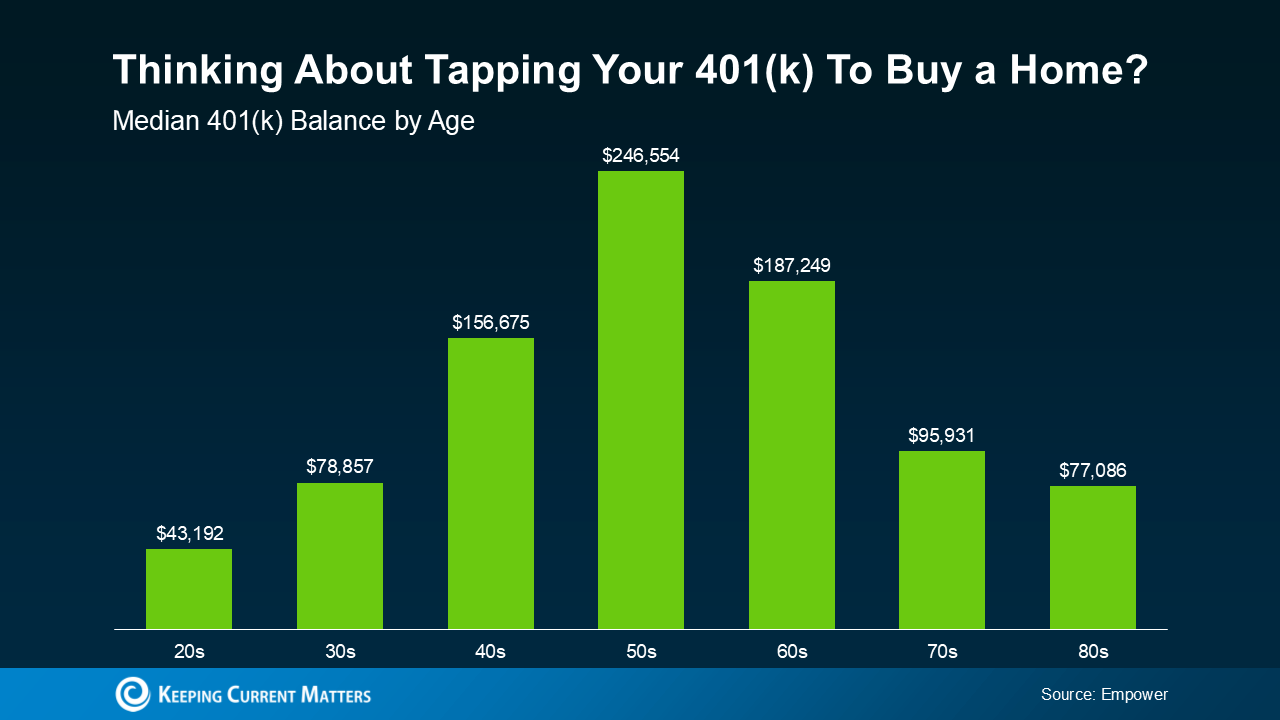
Data from Empower shows many Americans have built up considerable retirement savings. The median 401(k) amount for anyone in their 40s-60s is six figures (see graph below):
 And when you’ve got a good chunk saved and your dream home is right there, reaching for it can feel like an easy call.
But dipping into your retirement savings to buy a home could cost you a penalty and set back your finances later on. That’s why it’s a good idea to explore other options for your down payment first. As Redfin says:
“If you’re struggling to save enough for a down payment, you may be wondering if tapping into your 401(k) is the right option. While it’s possible, doing so comes with significant risks, like early withdrawal penalties and lost investment growth.“
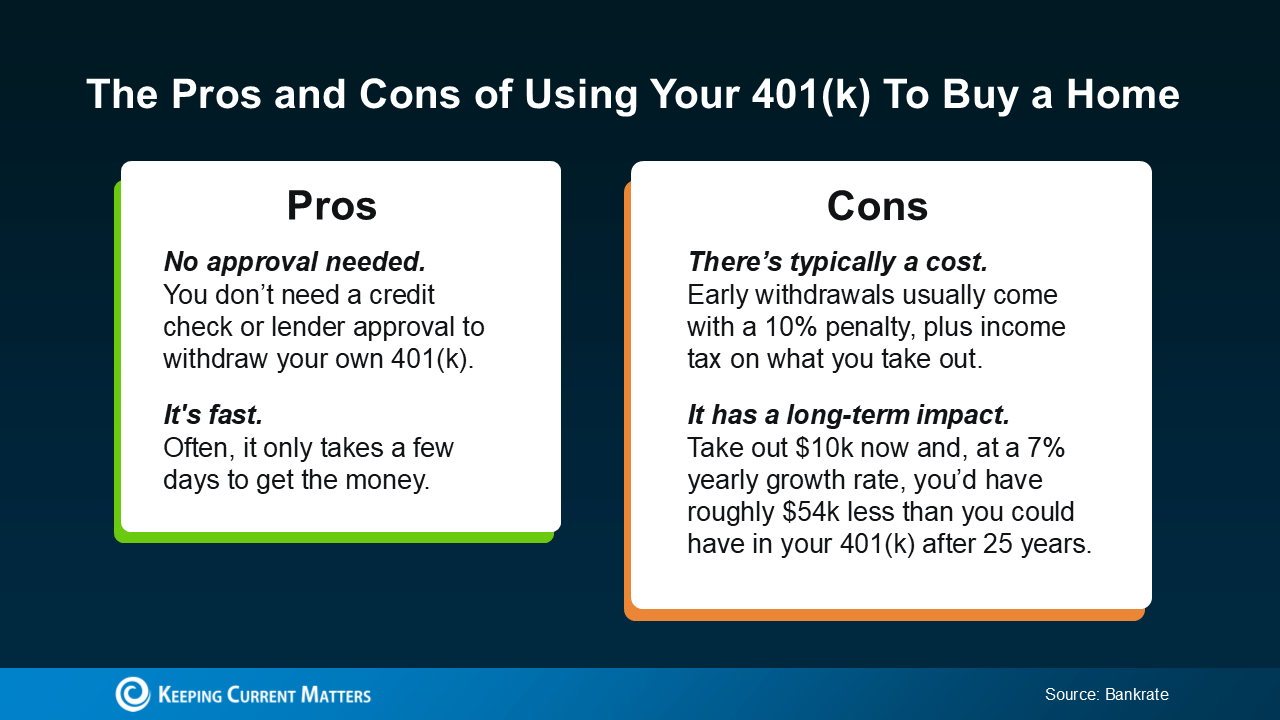
Before you decide, have a financial advisor help you compare the upsides to the risks. Bankrate points to a few of each (see visual):
Other Options Worth Exploring First
Your 401(k) isn’t the only way to finance a home purchase. Redfin outlines a few other options to look into before you decide what to do:
Low and No-Down Payment Loans: FHA loans, for example, allow qualified buyers to put down as little as 3.5% of the home’s price, depending on their credit scores.
Down Payment Assistance Programs: Many national and local programs can help reduce what you pay toward your down payment or closing costs.
Make a Plan Before You Make a Move
No matter which route you take, talk with a financial expert first. The buyers who come out ahead build a solid plan with the right professionals before starting their journey to homeownership. As NerdWallet puts it:
“Even if you’re convinced a 401(k) loan is the way to go, it’s important to understand the risks at the outset.“
Bottom Line
Affordability is definitely a challenge, but that doesn’t mean tapping your 401(k) is your only way in if you want to buy.
If you're considering using your 401(k) savings for a down payment, weigh all your options and talk with a trusted financial advisor before you make any decisions. They’ll help you make a plan to fit your goals and your budget.
Frequently Asked Questions
Q: What is the penalty for withdrawing money from a 401(k) to buy a home?
A: If you take an early cash distribution from your 401(k) before age 59½, the IRS typically charges a 10% early withdrawal penalty on top of standard federal and state income taxes on the amount withdrawn.
Q: What is the difference between a 401(k) withdrawal and a 401(k) loan for a home purchase?
A: A 401(k) withdrawal is permanent, incurs taxes and potential penalties, and permanently removes funds from investment growth. A 401(k) loan allows you to borrow up to $50,000 (or 50% of your vested balance) penalty-free, repaying the principal and interest back into your own account over a set period through payroll deductions.
Q: What down payment options exist if I don't want to touch my retirement savings?
A: Conventional loans allow down payments as low as 3%, FHA loans require just 3.5% for qualifying credit scores, and VA or USDA loans offer 0% down options for eligible buyers. Additionally, thousands of local state down payment assistance (DPA) programs offer grants or second mortgages to cover initial costs.