Housing data from HousingWire and Realtor.com shows that mortgage rates climbing above 7% have softened buyer demand and accelerated active housing inventory growth, adding roughly 25,000 listings rather than stemming from a surge in new sellers. With typical homes spending 61 days on the market (up from 41 days in September 2021), buyers gain increased selection and negotiating leverage for rate buydowns and closing costs, while sellers must rely on competitive day-one pricing and strong property presentation.Mortgage rates being back above 7% isn’t exactly the news most people wanted. But it’s changing the market in ways that matter whether you’re buying or selling.
The number of homes for sale is growing faster than it was this time last year. And interestingly, the main reason isn’t a flood of new listings. It’s because homes aren’t selling as quickly.
Here’s why – and what that means if you’re thinking about buying or selling.
Inventory Growth Is Picking Up Steam
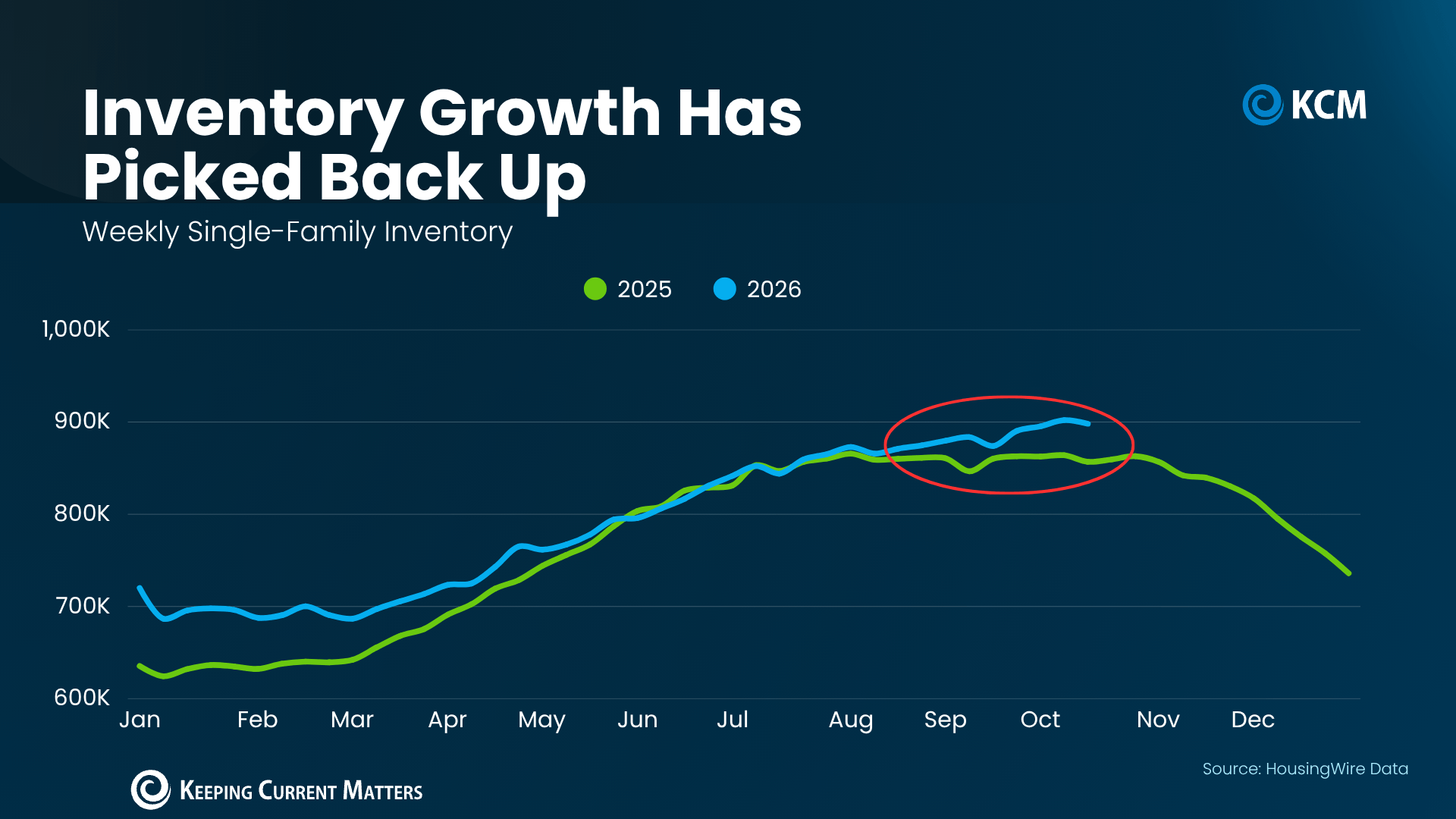
According to HousingWire Data, after inventory growth slowed down for most of the past year, it’s accelerated again in recent weeks. You can see that in the graph below. Just look at the blue line:
And what’s behind this shift might surprise you.
When rates rise, some buyers hit pause. That means fewer homes sell each week. And as those unsold homes stay on the market alongside new listings, the number available starts to grow (see the blue line in the graph below).
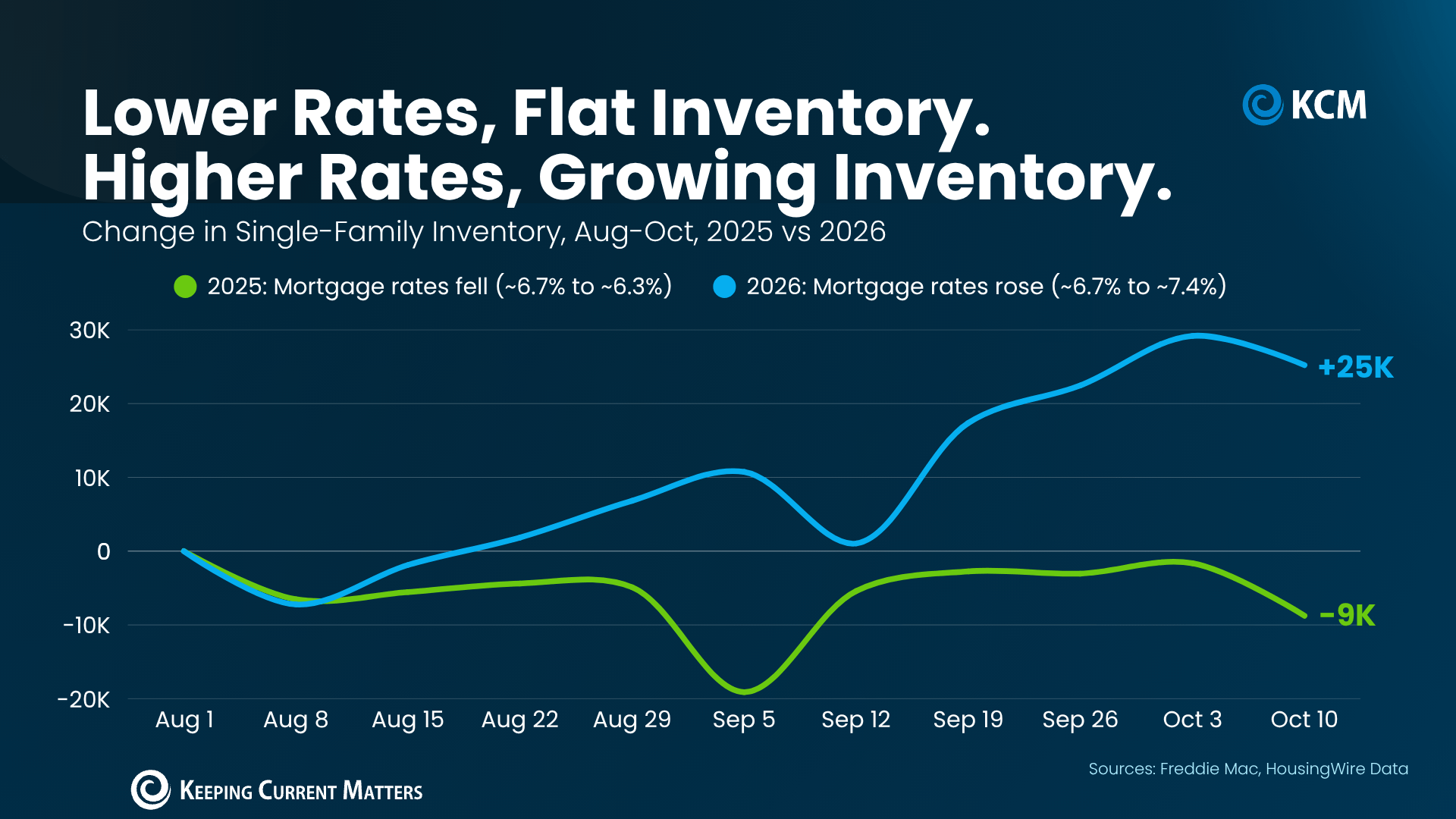
Here’s another way to look at it to make it even more obvious. The graph below shows the relationship between rates and inventory. Again, this year is the blue line. Last year? That’s the green.
With rates inching up this year, you can see inventory has grown by about 25k. But when rates went down this time last year, buyers jumped back in, and inventory actually dropped by about 9k.
Logan Mohtashami, Lead Analyst at HousingWire, explains how that’s flipped from 2025 to 2026:
“With mortgage rates over 7%, demand tends to soften and inventory rises . . .”
Homes Are Spending More Time on the Market
Here’s another metric that shows the impact rates are having: time on market. Data from Realtor.com shows the typical home spent 61 days on the market this September. Back in September 2021, it was just 41 days (see graph below):
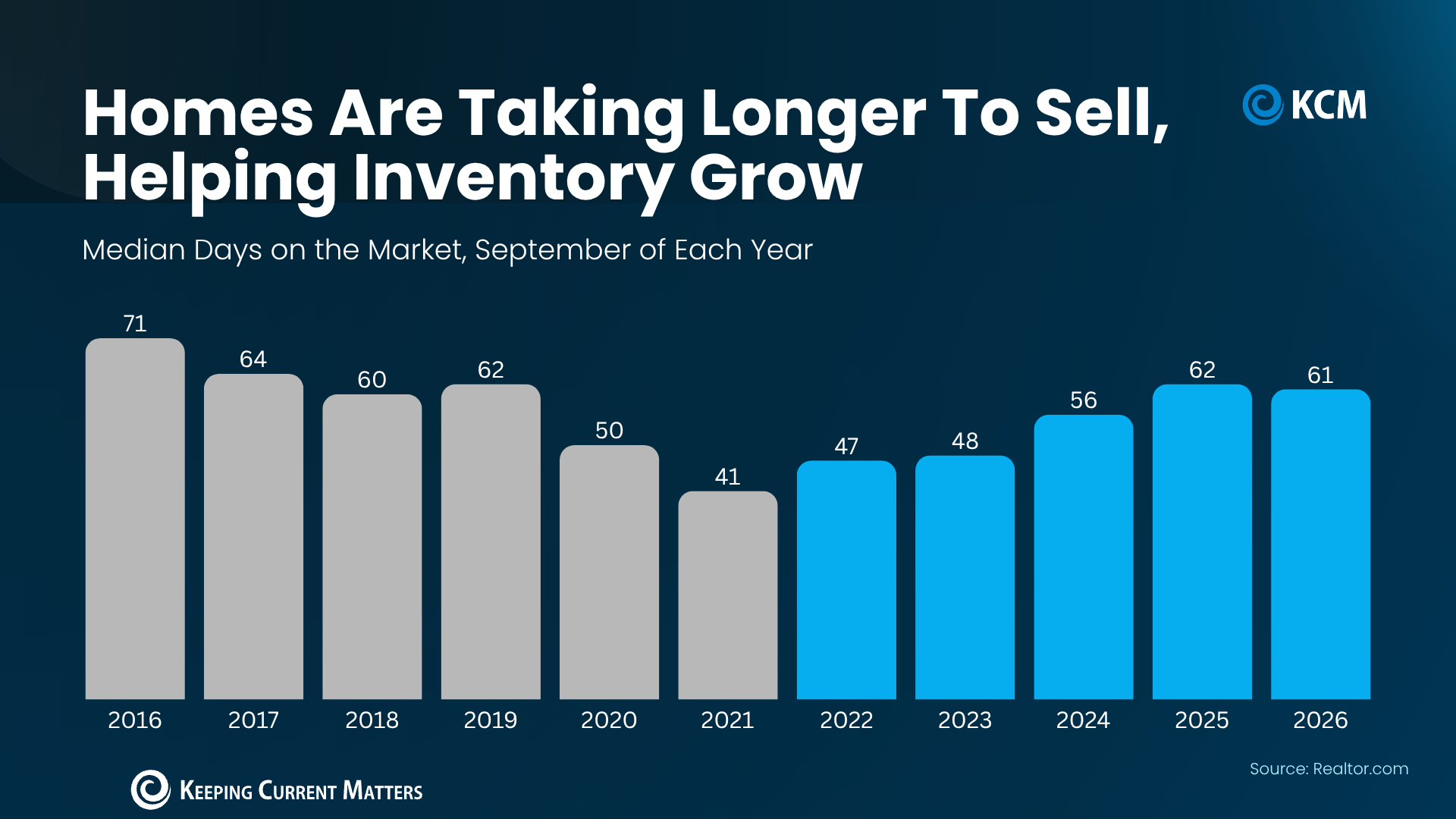
Here’s what that tells us. In 2021, when rates were low, more buyers were active, and homes sold fast. But now that rates are a bit higher, not as many buyers are interested, so it takes a bit longer to close a deal.
How To Make This Market Work for You
So, what does all of this mean for your plans? That depends on which side of the move you’re on:
If you’re buying, more homes for sale means more choices and less pressure to rush. And more room to negotiate too. A house that’s been sitting for a while could have a seller who’s more willing to talk – not just about price, but repairs, closing costs, or even helping buy down your mortgage rate.
That doesn’t mean every seller will play ball. But compared to the frenzy of a few years ago, buyers have more leverage now.
If you’re selling, the right strategy can make all the difference. Buyers have more homes to choose from, so making yours stand out is especially important. That starts with pricing it right from day one, making a great first impression, and working with your agent to highlight what makes your house worth choosing. Buyers are still buying and homes are still selling. The key is making sure yours is positioned to attract the right buyer.
The market hasn’t stopped. It’s just moving at a different pace. And whether you’re buying or selling, your strategy needs to move with it.
Frequently Asked Questions
Q: Why is housing inventory growing if there isn't a surge in new listings?
A: Inventory is increasing primarily because higher mortgage rates above 7% have caused some buyers to pause their searches. When fewer homes sell each week, existing active listings remain on the market longer alongside new listings, causing total available supply to accumulate.
Q: How long are homes staying on the market compared to previous years?
A: According to Realtor.com data, the typical home spent 61 days on the market in September, compared to just 41 days during the low-rate market of September 2021. This slower pace gives buyers more time to evaluate options without facing immediate bidding wars.
Q: How can buyers take advantage of rising inventory and longer days on market?
A: When listings sit on the market longer, sellers become more receptive to negotiation. Buyers can use this leverage to negotiate lower purchase prices, request seller-paid closing costs, ask for repair credits, or secure seller-funded mortgage rate buydowns to lower their monthly payments.
Bottom Line
In many places right now, inventory is growing and homes are taking a bit longer to sell. And that’s information that should shape the strategy you use going in.
Whether you're buying or selling, connect with a local real estate agent to look at how long homes are taking to sell in your neighborhood, so your offer, or your price, fits today's market.